
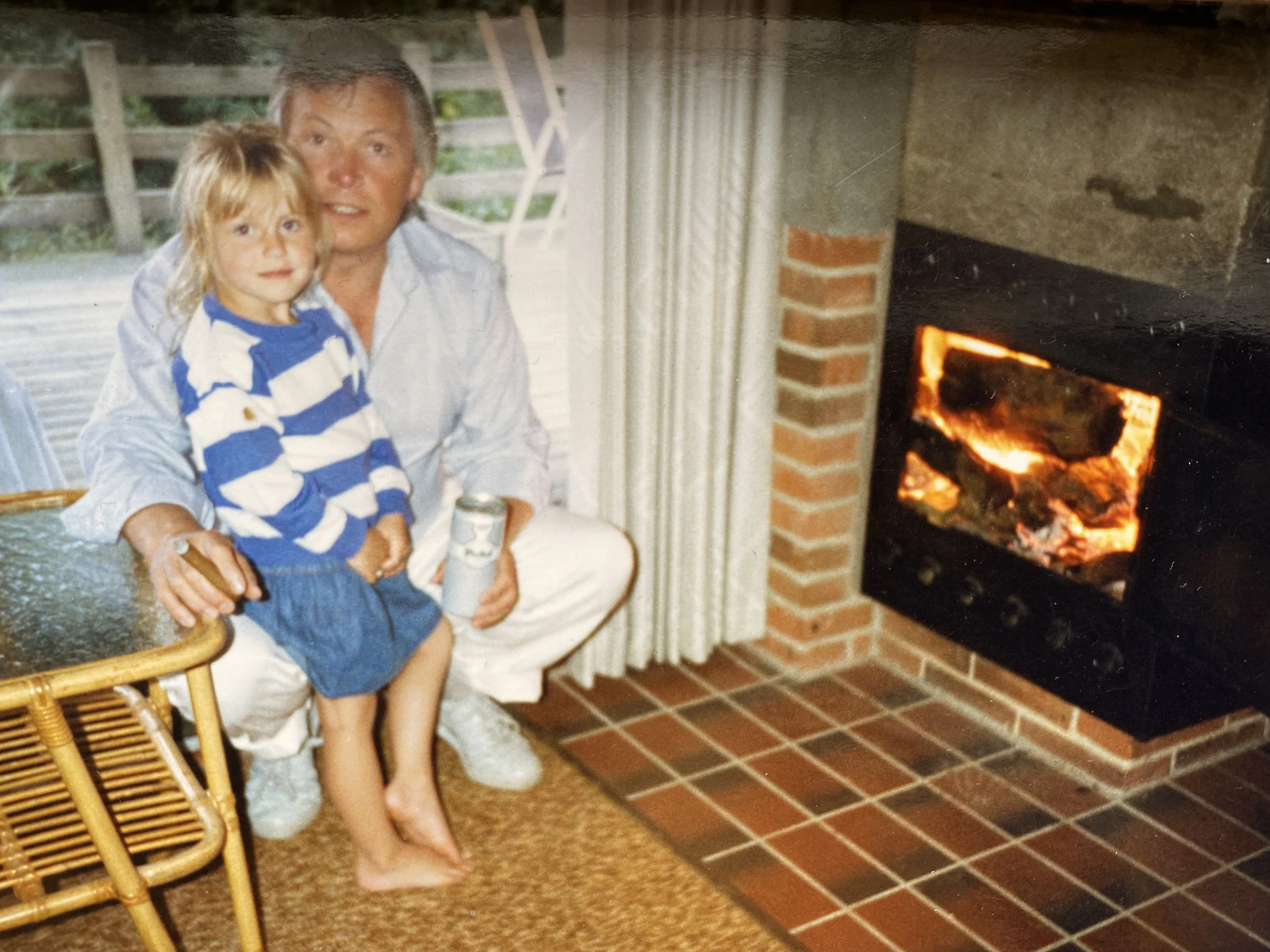
A personal story of trauma, grief, burnout and inner child healing
This post contains personal experiences of suicide and childhood trauma. Please take care while reading and step away if needed.
When I was seven years old, my dad tucked me into bed, told me he loved me, and kissed me goodnight.
That was the last time I ever saw him.
What I didn’t know then was that he was on his way to kill himself. That night forever changed the course of my life.
Living with the trauma of losing a parent to suicide meant my world turned upside down in an instant. I went from a happy, carefree little girl to suddenly holding very adult, frightening, and overwhelming emotions - with no language, support or space to process them.
Suppressing Trauma: A Childhood Survival Strategy
I was too traumatised to explain what I was feeling, and no one offered me an outlet to process my grief.
So I did the only thing my nervous system knew how to do: I suppressed it.
I blocked out memories. I wore the mask of “I’m fine.” I hoped that if I ignored it long enough, one day I’d magically feel better, that I could “fake it until I made it”.
Of course, that never happened. Instead, my trauma grew quietly beneath the surface.

How Childhood Trauma Impacts the Brain
As I’ve grown older, I’ve often wondered how that trauma shaped my developing brain. Thankfully, neuroscience now offers insight and with it, compassion.
Trauma fragments the brain and memory. This is not a flaw; it’s a brilliant survival response.
In my case, because the trauma was the death of my dad, my brain protected me by taking many of my memories of him away. Almost overnight, I lost not only my physical dad, but also access to so many memories of him.
At the time, I felt like I was going mad. In reality, my brain was trying to keep me safe.
This coping mechanism can be lifesaving, especially in cases of severe abuse, but for me, it compounded my grief.
Childhood trauma rewires the brain to survive, shaping how we think, feel, and respond to the world.
The amygdala (threat detector) becomes hyperactive, constantly scanning for danger
The prefrontal cortex (decision-making and emotional regulation) can struggle to stay online
The hippocampus (memory and learning) may misfire under stress
This often leads to nervous system dysregulation, where you might feel anxious, on edge, emotionally numb, or easily overwhelmed.
These changes are not deficits. They are adaptive survival mechanisms.

How Childhood Trauma Triggered My Burnout
At the age of 30, I experienced complete and total burnout that took years to truly recover from.
A huge factor was that I was carrying unprocessed childhood trauma and grief. My nervous system was already overloaded before adult life pressures were added on top.
Looking back, the red flags were there:
Overworking – Work became my escape; switching off felt impossible
People pleasing – A deep belief that if I kept everyone happy, no one would leave or die
A harsh inner critic – A constant voice telling me I wasn’t good enough
Perfectionism – Never satisfied, always self-punishing for mistakes
Self-worth tied to my job – Failure wasn’t an option; even small errors sent me spiralling
A nervous system on high alert – Chronic anxiety meant I was internally overworking all the time
Looking back, burnout wasn’t a surprise. It was the inevitable result of years of survival mode.
What Changed Everything
Everything shifted when I did the Hoffman Process, a week-long, intensive personal development programme involving visualisation, meditation, movement, and deep childhood work.
It felt like ten years of therapy in one week.
My anxiety and depression eased dramatically, but the most significant change was this:
I finally allowed myself to grieve my dad.
That grief had been waiting decades to be felt.

Why Inner Child Healing Was Pivotal
Nurturing my inner child became the foundation of my healing and it remains my greatest wellbeing tool.
Now:
When I feel anxious - I ask my inner child how she’s feeling
When I feel unsafe - I ask what she needs
When I feel overwhelmed - I check in with her
When grief arises - I create space for it
When sadness appears - I respond with compassion
My inner child holds the key to my nervous system, my mental health, and my wellbeing.
I regularly remind her:
I will never abandon you
All of your emotions are valid
You are safe with me
You are loved, loving, and loveable
You are good enough exactly the way that you are
You don’t need to be perfect
It’s okay to make mistakes
I see you. I hear you.
A Gentle Invitation - Nurture Your Inner Child Programme
If you’re curious about nurturing your inner child and want a safe, compassionate way to get to the root cause of your anxiety, stress, overwhelm, grief, burnout or current day triggers - I’ve created a programme specifically for this work.
The Nurture Your Inner Child Programme is set across 10 weeks and supports you to:
Understand present-day triggers and trace them safely back to childhood
Process core memories with compassion and regulation
Release limiting beliefs that no longer belong to you
Develop deep self-compassion and emotional safety
Rebuild confidence, self-worth, and inner trust
Create healthier relationships with yourself and others
Integrate your adult self and inner child so you feel whole again
Deeply nurture your inner child so that they feel safe, seen, heard, loved and good enough
Book your FREE consultation call today and we can talk through your own personal needs. I look forward to hearing from you.